Thursday, October 8, 2009

GLENHURST AVENUE


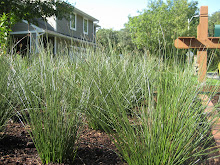
The clients requested a complete redesign of their yard, front and back, and were drawn to a prairie-style aesthetic. The ultimate design drew its inspiration from the idea of gathering spaces and circles. The intent of phase one, the front yard, was to break away from the standard shrub-and-flower shallow landscape motif and pull the landscape away from the house, to transform the yard into both a usable and an aesthetic space. The plant and material palate takes cues from the formality of the neighborhood and includes boxwoods and formally spaced grasses, gravel pathways, and steel edging. These proverbial bones of the landscape then help to frame those portions of the landscape that contain a wilder, more prairie-esque feel. 

Friday, October 2, 2009

PINE HILL ROAD


The directive for this project was to create a rain garden that would capture runoff from a newly installed driveway.  The design took its inspiration from the crisscrossing flows of water in a river, as well as from the curves of the newly installed driveway.  The said water flows translated into three-dimensional physical zones in the landscape that would contain plants whose water needs correspondeded to how much water each zone would receive during a rainstorm.  Horizontal elements were added to break up the curves and to help create discrete planting zones.  The overall structure of the landscape can be perceived in early spring, when the plants are cut back to the ground. Gradually, as the plants grow throughout the summer months, the structure's edges become slightly obscured only to be eclipsed by the forms of the plants.  The whole cycle resumes the following spring.

JOPPA AVENUE

This project consisted of an existing perennial garden that the owners wanted to update to give it some structure.  The design thus called for the addition of gravel pathways lined with steel edging, and a gathering circle in the center in which to sit, relax, and listen to the hum and buzz of the pollinators darting in and out.  Additionally, the design called for a reduction in the number of perennials in the landscape and the addition of grasses and shrubs so as to add greater year-round interest and lasting form to the garden.


LITTLECREST DRIVE

The client had recently purchased a mid-century home and was seeking to modernize the aesthetic of both the home and grounds.  He wanted a landscape consisting primarily of textures and colors but not of flowers.  The design sought to pull the landscape away from the house using a series of interlocking rectilinear spaces in which would be planted predominantly grasses, with some shrubs.  Drainage was to be redirected to the side of the house, and thus the design proposed a dry wash in which to direct and absorb the diverted water.  The rectilinear spaces were intended to break down and be carried away into the wash.   

Thursday, October 1, 2009

ZENITH AVENUE

The project program was to completely rethink and stitch back together a traditional American-style residential landscape that consisted predominantly of large, visually dull shrubs that hugged the house.  The idea was thus to pull the landscape away from the house and introduce a simple, but modern plant palate of tall and short grasses, flowering shrubs, and a few flowering perennials.  The overall form of the landscape was developed to incorporate the existing trees on the site and to create a sense of movement and flow from one end of the site to the other.  A terraced patio along the east side of the house - technically the "back" yard - picks up the curves begun along the west side of the house.


PRAIRIEFORM PROJECTS

Launch.